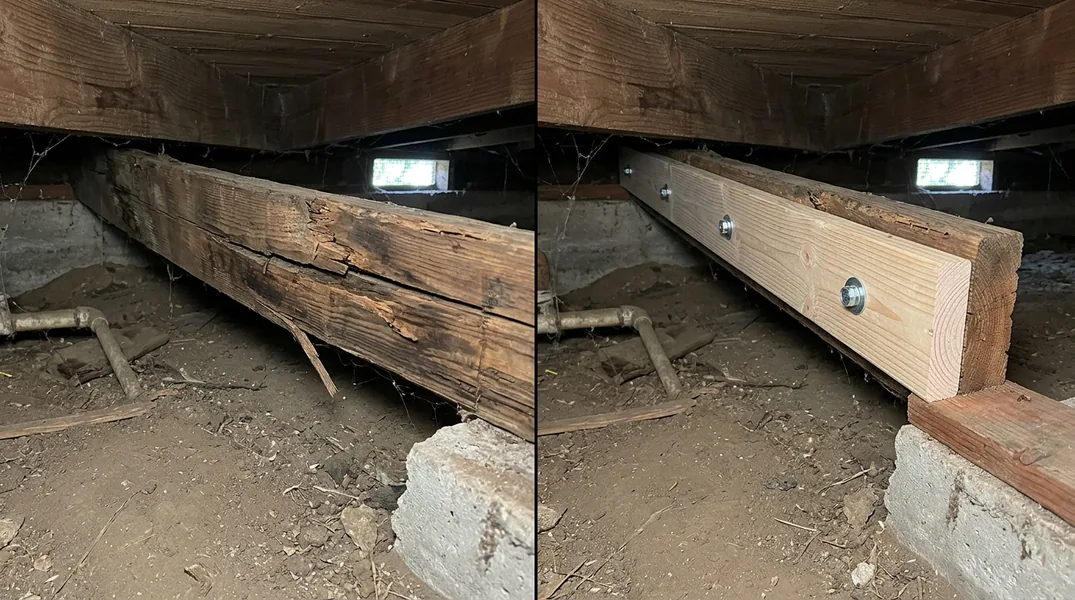
Why Old Fresno Homes Develop Sagging Floors
Fresno's unique geology creates a perfect storm for foundation problems and sagging floors in older homes. The San Joaquin Valley, where Fresno sits, is built on expansive clay soils that shift dramatically with moisture changes. When the soil beneath your home absorbs water during rainy seasons or irrigation, it swells. During dry periods, it shrinks and pulls away from the foundation. This constant movement puts enormous stress on the structural support system underneath your house, particularly the floor joists and beams that have been carrying your home's weight for decades.
Homes built before the 1980s in the Fresno area were often constructed with minimal foundation reinforcement or moisture barriers compared to modern standards. Many older homes sit on shallow foundations or concrete piers that don't account for the aggressive expansion and contraction of clay soil. Over time, this foundation movement translates directly to sagging floors, cracked drywall, and misaligned doors and windows. If your home was built before 1990 and you're noticing a slight slope when you walk across certain rooms, expansive soil is almost certainly the culprit.
The Role of Expansive Clay Soil in Foundation Damage
Expansive clay soil is fundamentally different from the sandy or rocky soils found in other parts of California. Clay particles are extremely small and hold water like a sponge. When moisture content increases by just 5 to 10 percent, clay can expand by 10 to 15 percent in volume. This isn't a minor shift, it's a powerful upward force that can lift entire sections of a foundation. Conversely, when the soil dries out, it shrinks and creates voids beneath the foundation, causing it to settle unevenly. This differential settlement is what creates the sagging, bouncy, or uneven floors homeowners notice.
The problem is compounded in Fresno because the valley experiences extreme seasonal variations. Winter and spring bring irrigation water and occasional rain, triggering soil expansion. Summer and fall bring intense heat and drought, triggering shrinkage. Your foundation is essentially being pushed up and pulled down year after year. Additionally, if your home has poor drainage, a leaking irrigation system, or a plumbing leak, the soil stays wetter longer, amplifying the expansion problem. Over 40 or 50 years, this cycle causes the floor structure to sag, twist, and lose its original level plane.
Signs Your Floor Joists Need Repair
The most obvious sign is a noticeable sag or slope in your floor. Walk across your home and pay attention to whether the floor feels level or if you sense a gentle downward slope toward one area. You might also notice that marbles roll across the floor, or that water pools in certain spots when you spill it. Doors and windows that are difficult to close or that swing open on their own are another red flag. These misalignments often occur because the frame of the house has shifted as the floor structure has sagged.
Less obvious but equally important signs include cracks in plaster or drywall, especially diagonal cracks that radiate from corners of doorways or windows. Squeaky floors, bouncy spots, or areas that feel soft or spongy when you walk on them can indicate that the floor joists have weakened or that there's moisture damage. If you have a basement or crawl space, you might see visible gaps between the foundation and the rim joist, or you might notice that posts or piers no longer sit flush against the beams they're supposed to support. Any combination of these signs warrants a professional inspection of your floor structure.
Floor Joist Repair Options: Sistering and Beyond
Floor Joist & Subfloor Repair is often the most practical solution for sagging floors caused by foundation movement. One of the most common techniques is called sistering, which involves fastening a new, strong piece of lumber alongside the existing damaged or weakened joist. The new joist (called a sister joist) shares the load with the old one, restoring strength and preventing further sag. This method is particularly effective when the original joists are still structurally sound but have lost some capacity due to age, moisture exposure, or minor damage. Sistering floor joists can often be done without removing the flooring above, making it less invasive and disruptive to your daily life.
In more severe cases, the entire joist may need to be replaced. If the joist shows signs of Wood Rot & Dry Rot Repair, termite damage, or significant structural compromise, a full replacement is necessary. Some homes benefit from additional support posts or piers installed beneath the floor system to provide extra load-bearing capacity. In cases where the foundation itself has failed or moved excessively, Beam Replacement & Load-Bearing Wall Removal may be required to restore the home's structural integrity. The right approach depends on the extent of the damage, the age of the home, and the underlying cause of the sag.
Sagging Floor Repair Cost in Fresno: What to Budget
The pricing for sagging floor repair varies widely depending on the scope of work. Sistering a single floor joist typically costs between $300 and $800 per joist, depending on the joist's length and the accessibility of the work area. If you need to sister multiple joists across a room or an entire floor, costs can quickly climb to $2,000 to $5,000 or more. Full joist replacement is more expensive, ranging from $800 to $1,500 per joist because it involves removing the damaged wood and installing new lumber in its place. If the subfloor is also damaged and needs repair or replacement, add another $500 to $2,000 depending on the area affected.
More extensive repairs that address the underlying foundation problem are significantly more costly. If expansive soil is causing the sag and your foundation needs stabilization, you may be looking at $5,000 to $15,000 or more for underpinning, pier installation, or foundation reinforcement. The good news is that many of these repairs can be phased over time if budget is a concern. Addressing the most critical joists first and stabilizing the foundation can prevent further damage and buy you time to plan additional work. Because every home and every situation is unique, the best approach is to contact Fresno Carpentry at (559) 206-3608 or request a free estimate so you understand the true cost for your specific situation.
When to Call a Professional for Floor Joist Repair Near Me
If you suspect your floors are sagging, don't wait. The longer you delay, the more structural damage can occur, and the more expensive the repair becomes. A professional inspection typically costs $200 to $400, but it gives you a clear picture of what's happening beneath your home and what needs to be done. Professionals can assess whether the sag is caused by foundation movement, wood rot, termite damage, or a combination of factors. They can also determine whether sistering joists will suffice or whether more invasive repairs are needed.
Fresno Carpentry specializes in diagnosing and repairing floor problems caused by Fresno's challenging soil conditions. Our team understands the unique geology of the San Joaquin Valley and knows how to design repairs that address both the immediate sagging and the underlying foundation issues that caused it. We recommend getting an inspection as soon as you notice signs of floor movement or structural distress. Call us today at (559) 206-3608 to schedule your free estimate and take the first step toward a stable, level home.
Looking for a professional carpentry contractor in Fresno? Fresno Carpentry responds fast for all your carpentry needs.
Get a Free QuoteOur services: Wood Rot & Dry Rot Repair · Termite Damage Repair · Floor Joist & Subfloor Repair